
Currently Empty: ₹0.00

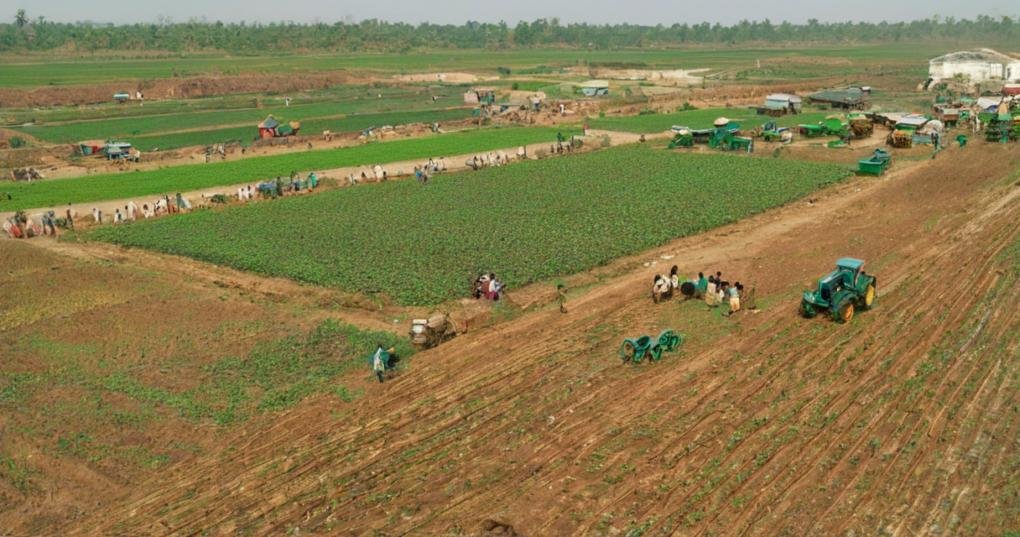
Corporate farming and large-scale agriculture are transforming the agricultural landscape of India by combining traditional farming wisdom with modern technology, professional management, and sustainable practices. As the demand for quality food, agricultural efficiency, and rural development continues to grow, corporate farming has emerged as a powerful solution to address productivity challenges, fragmented landholdings, and market inefficiencies.
Understanding Corporate Farming
Corporate farming refers to the organized cultivation of agricultural land by companies or enterprises that manage farming operations on a large scale. Unlike small individual farms, corporate farming operates with structured planning, scientific techniques, skilled manpower, and advanced infrastructure. This approach enables better crop management, higher yields, consistent quality, and improved profitability.
Large-scale agriculture allows for optimal utilization of land, water, seeds, fertilizers, and technology. Through systematic planning and execution, corporate farming ensures that farming is no longer dependent solely on uncertain factors but is guided by data, research, and expert knowledge.
Importance of Large-Scale Agriculture in India
India is an agrarian economy, but many farmers still face challenges such as low productivity, rising costs, limited access to technology, and unstable market prices. Corporate farming plays a vital role in overcoming these challenges by introducing efficiency, transparency, and innovation into agricultural practices.
Large-scale agriculture enables:
- Better resource management
- Reduced production costs through economies of scale
- Higher and more consistent crop output
- Stronger linkage between farms and markets
By operating at scale, corporate farms can invest in irrigation systems, mechanization, soil testing, and crop monitoring tools that are often inaccessible to small farmers.
Role of Technology in Corporate Farming
Modern technology is the backbone of corporate farming. Advanced tools and techniques such as precision farming, GPS-enabled machinery, automated irrigation, and data-driven decision-making significantly enhance productivity and sustainability.
Technology helps in:
- Soil health assessment and nutrient optimization
- Weather forecasting and risk management
- Efficient water usage through drip and sprinkler systems
- Pest and disease control using scientific methods
By adopting smart farming practices, large-scale agriculture minimizes waste, improves crop quality, and ensures long-term soil fertility.
Sustainable Farming Practices
Sustainability is a key pillar of corporate farming. Large-scale agricultural operations are increasingly focusing on eco-friendly methods that protect the environment while maintaining high productivity. Sustainable practices help preserve natural resources and ensure that agriculture remains viable for future generations.
Key sustainable approaches include:
- Crop rotation and diversification
- Organic and bio-based inputs
- Water conservation techniques
- Reduced chemical dependency
Corporate farming promotes responsible land use, balanced ecosystems, and climate-resilient agriculture, contributing positively to environmental conservation.
Farmer Empowerment and Employment Generation
Contrary to common misconceptions, corporate farming does not replace farmers; instead, it empowers them. Large-scale agricultural models often work in collaboration with local farmers through partnerships, contract farming, and training programs.
Benefits for farmers include:
- Assured income and market access
- Exposure to modern farming techniques
- Skill development and technical training
- Employment opportunities in rural areas
Corporate farming creates stable livelihoods by integrating farmers into organized supply chains and providing them with knowledge, resources, and financial security.
Economic Growth and Agribusiness Development
Corporate farming significantly contributes to agribusiness growth and rural economic development. By producing high-quality agricultural output at scale, corporate farms strengthen food supply chains, support food processing industries, and attract agricultural investments.
Large-scale agriculture supports:
- Food security and supply stability
- Growth of agro-based industries
- Export potential for agricultural produce
- Infrastructure development in rural regions
These factors collectively enhance national economic growth while improving the standard of living in farming communities.
Quality Control and Market Integration
One of the major advantages of corporate farming is strict quality control. Organized agricultural operations follow standardized processes for planting, harvesting, storage, and transportation. This ensures uniform quality, reduced post-harvest losses, and compliance with market standards.
Corporate farms maintain direct links with wholesalers, retailers, exporters, and food processing units. This integration eliminates unnecessary intermediaries, ensures fair pricing, and enables faster market access.
Future of Corporate Farming
The future of agriculture lies in scalability, sustainability, and innovation. Corporate farming and large-scale agriculture are expected to play a central role in meeting the growing food demands of an increasing population.
With advancements in agri-tech, digital platforms, and sustainable practices, corporate farming will continue to evolve. The focus will shift toward climate-smart agriculture, renewable energy usage, and data-driven farming models that maximize efficiency while minimizing environmental impact.
Commitment to Responsible Agriculture
At its core, corporate farming is about responsible growth. It balances productivity with sustainability, profitability with ethics, and innovation with tradition. By adopting a structured and forward-thinking approach, corporate farming ensures long-term success for farmers, businesses, and the nation.
Conclusion
Corporate farming and large-scale agriculture represent a modern, efficient, and sustainable approach to farming. By integrating technology, professional management, and environmentally responsible practices, this model addresses many of the challenges faced by traditional agriculture.
As agriculture continues to evolve, corporate farming stands as a powerful driver of transformation—boosting productivity, empowering farmers, strengthening rural economies, and ensuring food security. With a clear vision and commitment to excellence, corporate farming paves the way for a resilient and prosperous agricultural future.

